

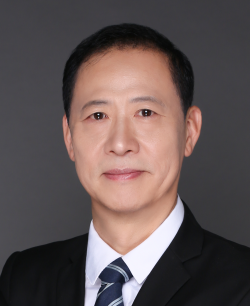
Lin Li
Ningbo Institute of Materials Technology and Engineering, Chinese Academy of Sciences, China
Title:
Abstract:
Biography:
Updating......
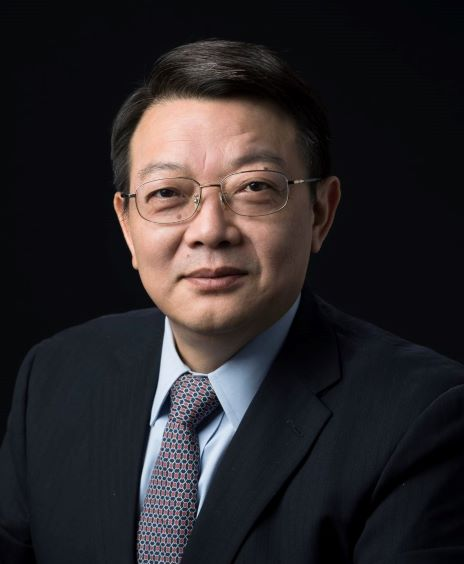
Tianchun Ye
Institute of Microelectronics of the Chinese Academy of Sciences, China
Title:Breakthrough Innovation in Integrated Circuit Device Manufacturing Processes
Abstract:
Integrated circuit process evolution is the fundamental basis for the development of modern information and artificial intelligence technologies. Over the past few decades, China has been making continuous efforts in this field. Starting from the 90nm node, integrated circuit CMOS transistors have demanded the development of new processes, materials, and structures to overcome key bottlenecks in PPA scaling by generations. The Institute of Microelectronics of the Chinese Academy of Sciences (IMECAS) has long been engaged in the research and development of innovative transistor technologies. They have made a great breakthrough on technical challenges such as precise gate control, transistor performance modulation, and structural scaling in both 22nm high-k/metal gate-last, 14nm FinFET, and up-to-date GAA transistor processes, established a technical system with comprehensive independent intellectual property rights, and successfully applied it to domestic and international cutting-edge integrated circuit products.
Biography:
Prof. Tianchun Ye is a Professor at the Institute of Microelectronics, Chinese Academy of Sciences, IEEE Fellow, former Director of the Institute of Microelectronics, currently Deputy Director of the Circuits and Systems Branch of the Chinese Institute of Electronics, Deputy Director-General of the China Semiconductor Industry Association and Director of the Integrated Circuit Branch. A leading expert in metal-oxide-semiconductor (MOS) transistor micro-nano fabrication technology in China, with over 100 authorized invention patents. His related technologies have been widely applied by leading domestic and international enterprises in the mass production of cutting-edge products. Awarded 4 National Technology Invention Second Prizes and 7 provincial/ministerial-level science and technology awards, with over 300 academic papers published.
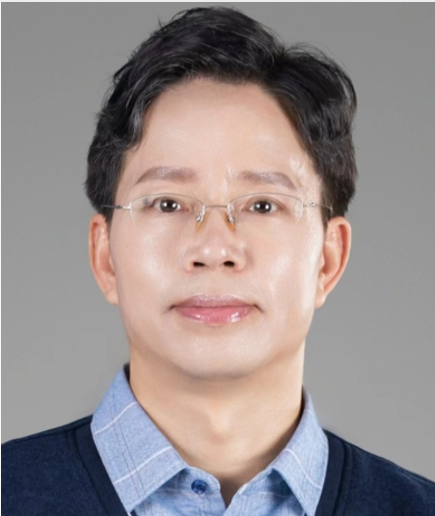
Changhui Rao
Institute of Optics and Electronics, Chinese Academy of Sciences, China
Title:Advancements on high resolution optical imaging with adaptive optics in NLAO, China
Abstract:
The National Key Laboratory of Adaptive Optics (NLAO), China, which is originated at the adaptive optics (AO) research in Institute of Optics and Electronics (IOE), Chinese Academy of Sciences in 1980, had been established in Jan., 2024. We have built the whole foundation of the AO including the AO theories, devices manufacture, and system development. For night-time high resolution imaging, 1.8m telescope with the 241-element deformable secondary mirror and 1 Na LGS had been built at the Gaomeigu site. 4m telescope with 1000 element class AO system had been put into the regular operation. The AO/GLAO systems with the 858-element deformable secondary mirror and 4 Na LGS for 4.2m telescope and the Nasmyth AO system with the 127-element large stroke and 1253-element high density two cascade deformable mirrors and 1 Na LGS for 14.5m telescope are developing. For day-time solar observation, three generation AO systems including conventional AO, GLAO and MCAO had been developed for 1m New Vacuum Solar Telescope (NVST) at Fuxian Lake Solar Observatory. The 1.8-meter solar telescope CLST with 451-element AO have been completed and will be installed at the Daocheng site in 2027. The AO/GLAO systems with the 931-element deformable mirror, one high-order correlating Hartmann-Shack wavefront sensor and four multi-direction wavefront sensors had finished the indoor integration test for 2.5m solar telescope of Nanjing University. A new solar AO system for prominence and the upgraded MCAO system is developing for NVST. Furthermore, we are developing a 60-cm compact solar adaptive telescope for high contrast solar imaging. The main advancements on high resolution optical imaging with AO are reported in this presentation.
Biography:
Changhui Rao is Director of the National Key Laboratory of Adaptive Optics and Professor at the Institute of Optics and Electronics, Chinese Academy of Sciences. He is an SPIE Fellow and an Optica/IAU Member, and a Council Member of the Chinese Optical Society and the Chinese Society for Optical Engineering. He has more than 30 years of research experience in high-resolution optical imaging for large ground-based telescopes and adaptive optics. His honors include the First Prize of the National Technological Invention Award (2017), the Second Prize of the National Technological Invention Award (2008), multiple Provincial Science and Technology Progress Awards, and selection for the National High-level Talent Special Support Plan and the Sichuan Tianfu Distinguished Scientist Program.

Juergen Czarske
Dresden University of Technology, Germany
Title:Merging of physics and deep learning for fiber endoscopy towards biomedicine
Abstract:
Light has the potential to detect and prevent the development of diseases, improve diagnostics, or cure them early and gently. Fiber optic endoscopes are urgently needed for biomedical purposes for instance to support biopsies. However, the instruments are often too bulky due to the use of lens systems. Lensless imaging with multicore and multimode fibers is discussed, combining holographic principles with deep learning. In 2024, Nobel Prizes in both physics and chemistry were awarded for deep learning. We address the transfer of deep learning into practice for both image acquisition and classifications for cancer diagnostics. Completely new principles of fiber-based endoscopy with diffusers and optical diffractive neural networks are highlighted. Fundamental insights are expected that will benefit both scientific progress and practical applications.
Biography:
Juergen W Czarske (Fellow OPTICA, SPIE, IET, IOP, EOS, COS, SAW, WLT) is director of the Institute for Circuits and Systems and BIOLAS center (Biomedical Computational Laser Systems), both based at TU Dresden. He is Member of Fraunhofer Society, Excellence Cluster Physics of Life, Else Kröner-Fresenius Center for Digital Health and BrainLinks&BrainTools. He has served as a nominator for the Nobel Prize in Physics. His awards include the 2019 OPTICA Joseph-Fraunhofer-Award and Robert-M.-Burley-Prize in Optical Engineering, 2020 Laser Instrumentation Award of IEEE Photonics Society, 2022 SPIE Chandra S Vikram Award in Optical Metrology and 2024 SPIE Dennis Gabor Award in Diffractive Optics. He was IEEE Distinguished Lecturer and is Vice President of the International Commission for Optics (ICO) and served as General Chair of the ICO-25 world congress in September 2022, which featured three plenary talks by Nobel laureates and participants from 55 countries. He is editor of the journals Light Science and Applications, PhotoniX Life, Advanced Photonics, Advanced Imaging, Light Advanced Manufacturing, and Intelligent Opto-Electronics.
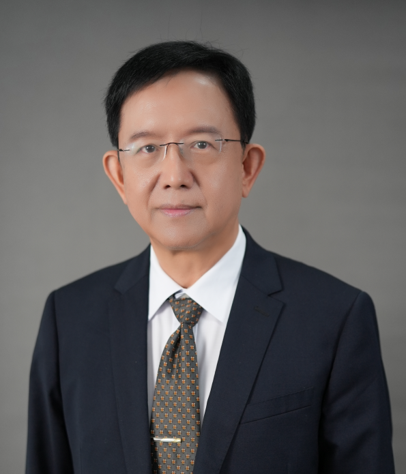
Luping Shi
Tsinghua University, China
Title:Brain Inspired Computing, Sensing and Intelligence
Abstract:
Brain inspired computing (BIC) and brain inspired perception (BIP) represent the most critical core technologies for embodied intelligence, and constitute two of the most important research fields in the intelligence-driven era. The key lies in developing the theories and technologies of BIC and BIP by drawing on fundamental principles of brain science, so as to advance brain inspired intelligence (BI). Research outcomes from brain inspired studies can be leveraged to decipher brain mechanisms and develop smart intelligent medicine. The dual-brain-driven paradigm further facilitates the coordinated advancement of information science, artificial intelligence and brain science. Centered on the questions of why, what and how, this report comprehensively discusses the latest progress, major challenges and potential solutions in BIC, BIP and BI, and provides an outlook on future applications and development pathways.
Biography:
Luping Shi is a professor, director of the optical memory national engineering research center,founding director of center for brain inspired computing research (CBICR), at Tsinghua university (THU), China. He received his Ph.D from Cologne university, Germany in 1992. He is an International institute of cognitive information and cognitive computing (I2CICC) fellow and a Society of Photo-Optical Instrumentation Engineers (SPIE) fellow. Chairman of the Brain-Inspired Intelligence Industry Innovation Alliance. His research interests include brain-inspired computing, perception and intelligence, brain-inspired smart medicine, information storage, and intelligent instrumentation. He proposed a hybrid architecture for brain-inspired computing and led the development of "Tianjic", the world's first hybrid, integrated storage-and-computing brain-inspired chip. Furthermore, he introduced a primitive-based paradigm for brain-inspired perception and led the creation of "Tianmouc" the world's first primitive-based complementary visual chip. The research results for "Tianjic" and "Tianmouc" were published as cover articles in Nature in 2019 and 2024, respectively, and were both selected by academicians of the Chinese Academy of Sciences and the Chinese Academy of Engineering as one of China's Top Ten S&T Advances for their respective years. The resulting products have been applied in key fields such as brain simulation, smart medicine, digital brains, and smart cities, pioneering the global deployment and practical application of brain-inspired computing technologies. He has been awarded honors including the National Innovation and Pioneer Award, the Zu Chongzhi Prize, and the First‑class Beijing Natural Science Award.
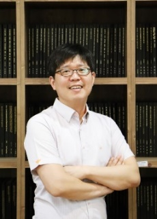
Junsuk Rho
Pohang University of Science and Technology, Korea
Title:Sustainable manufacturing of optical metasurfaces with engineered optical materials
Abstract:
Metasurfaces offer unprecedented control of amplitude, phase, and polarization while maintaining an ultrathin form factor. Despite these advantages, their reliance on nanoscale building blocks requires high resolution patterning. Conventional fabrication approaches such as electron beam lithography are based on direct writing, which suffers from low throughput and high cost, and is therefore not sustainable for large scale deployment. To address these limitations, we develop engineered optical materials that are fully compatible with nanoimprint lithography, enabling single step manufacturing of metasurfaces with scalable, low cost, and high throughput production. The first engineered optical material is a nanoparticle embedded resin, PER, created by dispersing high index nanoparticles into a resin to increase its effective refractive index while maintaining imprint compatibility. By choosing nanoparticles with appropriate optical properties, PERs can be tailored for different spectral ranges. TiO2 PER provides high index performance in the visible region, ZrO2 PER offers a wide bandgap and transparency in the ultraviolet, and Si PER enables high index operation in the near infrared. Using these PER, metasurfaces across a wide wavelength range can be produced in a single imprinting step. The second engineered optical material is a hybrid material in which a thin high index coating is deposited on the imprinted resin structures. This approach significantly increases the effective refractive index of the entire nanostructure. Depending on the target wavelength range, ZrO2 hybrid materials are used for ultraviolet operation and TiO2 hybrid materials are used for visible wavelengths. The third engineered optical material is a sol-gel based material that forms TiO2 structures through thermal sintering after imprinting. This method is well suited for fabricating high index metasurfaces and allows control of the TiO2 crystal phase, including anatase and rutile, by adjusting the curing temperature, thereby enabling high performance metasurface implementations. The fourth engineered optical material expands functionality by modifying either the matrix or the inclusions with functional species. Using polyvinyl alcohol as a humidity responsive matrix enables tunable metasurfaces, while hydroxypropyl cellulose allows fabrication of water soluble and environmentally friendly labels. Replacing the inclusions with quantum dots enables directional control of photoluminescence for active optical functionalities. All of these engineered optical materials can be replicated through wafer scale master molds fabricated by photolithography, enabling large area and high-volume production. Furthermore, nanoimprint lithography systems are being advanced from plate-to-plate configurations toward roll-to-plate and roll-to-roll systems, achieving higher yield, improved process automation, and increased throughput, bringing metasurface manufacturing closer to industrial scale. These mass producible metasurfaces are applicable to diverse technologies including VR/AR displays, 3D displays, 3D sensors, LiDAR, and compact imaging systems.
Biography:
Prof. Rho is a Yeon-San (延山) Endowed Chair Professor and Mu-Eun-Jae (无垠斋) Endowed Chair Professor at Pohang University of Science and Technology (POSTECH), Korea, with a joint appointment in the Department of Chemical Engineering, Mechanical Engineering, and Electrical Engineering. He received his Ph.D. at the University of California, Berkeley (2013), M.S. at the University of Illinois, Urbana-Champaign (2008) and B.S. at Seoul National University, Korea (2007) all in Mechanical Engineering. Prior joining POSTECH, he conducted postdoctoral research in Materials Sciences Division & Molecular Foundry at Lawrence Berkeley National Laboratory, and also worked as a principal investigator (Ugo Fano Fellow) in Nanoscience and Technology Division & the Center for Nanoscale Materials at Argonne National Laboratory. Prof. Rho has authored and co-authored more than 450 high-impact journal papers including Science and Nature. He is also the recipients of several notable honors and awards such as US Department of Energy Argonne Named fellowship (2014), Korean Presidential Early Career Award for Scientists and Engineers (2019), Member of the Young Korean Academy of Science and Technology (Y-KAST) (2020), Associate Member of the National Academy of Engineering of Korea (NAEK) (2022), Fulbright Visiting Scholar Fellowship (2022), Northwestern Simpson Fellowship (2022), Clarivate Highly Cited Researcher (2023, 2024), Elsevier/Stanford World Top 2% Scientist (2021-2025), ACS Nano Lectureship (2024). He serves 13 editorial positions including Light: Science and Applications (Springer-Nature), Microsystems and Nanoengineering (Springer-Nature).
Updating......
Links
Hosts
Optical Society of Sichuan
Chinese Optical Society

Institute of Optics and Electronics, Chinese Academy of Sciences
Organizers

Tianfu Xinglong Lake Laboratory

The 29th Research Institute of China Electronics Technology Group Corporation (CETC)

University of Electronic Science and Technology of China

Sichuan Normal University

Cheng Guang jing jie (Si chuan) Technology Co., Ltd.
Co-Organizers
Beijing Institute of Technology
Changchun University of Science and Technology
Chongqing Institute of Green and Intelligent Technology, Chinese Academy of Sciences
China Jiliang University
Ewha Womans University
Institute of Applied Electronics, China Academy of Engineering Physics
IESL-FORTH
Laser Fusion Research Center, China Academy of Engineering Physics
Microwave Photonic Technology Key Laboratory of Sichuan Province
National Key Laboratory of Adaptive Optics, China
Peking University
RMIT University
Sichuan University
Shanghai Institute of Optics and Fine Mechanics, Chinese Academy of Sciences
Southwest Institute of Technical Physics
Southwest Jiaotong University
Southwest University of Science and Technology
State Key Laboratory of Optical Field Manipulation Science and Technology, Institute of Optics and Electronics, Chinese Academy of Sciences
Tongji University
Zhejiang University
Publisher

SPIE Digital Library

Opto-Electronic Journals Group

Technology Publishing
 沪ICP备2022003645号TT©Shanghai Learning Information Service Co. Ltd. All Rights Reserved